THE TELESCOPIC FINGERS OF THE FUTURE: HOW A 1954 MAGAZINE PREDICTED TELEMEDICINE
From Retro-Futurism to Remote Reality
In the mid-twentieth century, as the world marveled at the dawn of the television age, a bold new vision for medicine emerged from the pages of popular science. Specifically, the concept of a "Teledoctor," promoted by futurist Hugo Gernsback and published in a 1954 magazine, painted a picture of remote medical diagnosis that was eerily prescient.
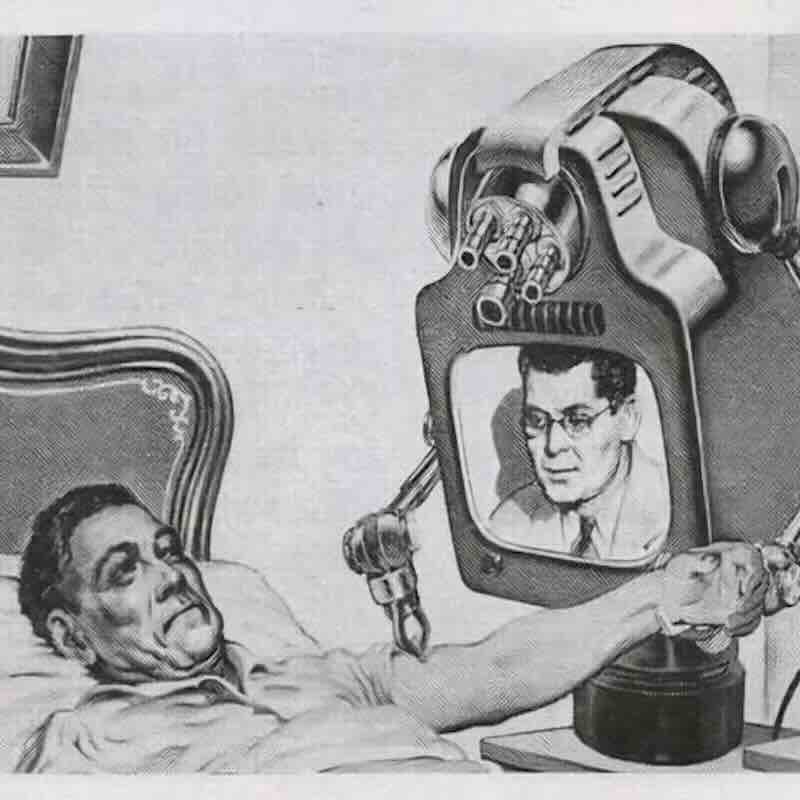
Gernsback’s imagined device, an update of his earlier "Teledactyl," featured a doctor sitting at a control panel, viewing a patient via a television screen while manipulating mechanical, force-feedback arms to conduct an examination, take a pulse, and even administer an injection. This was an ambitious vision, a marriage of diagnosis and remote manipulation transmitted over a simple telephone line.
How Well Did 1954 Predict Today's Telehealth?
While the clumsy, metal 'teledactyl' arms have been replaced by high-definition video calls and sophisticated biometric sensors, the core prediction of the 1954 article was spot-on: the separation of patient and physician by distance. Today's telemedicine uses standard internet infrastructure for secure video consultations (the ‘television screen’ part) and is increasingly integrating home diagnostic tools (the 'pulse and respiration' part).
The vision missed the sheer convenience of a simple smartphone or laptop as the interface, over the necessity of a large, dedicated machine. However, the conceptual leap—that a highly personal, tactile service like medicine could be delivered remotely—was a masterstroke of foresight. We live in Gernsback's world, where a quick virtual visit can resolve many common issues, saving time and resources for both patients and providers.
The Next Leap: AI, Robotics, and True Tele-Presence
The future of teledoctoring is moving beyond simple video calls and into the realm of the 1954 mechanical arms. Artificial Intelligence (AI) is now poised to fulfill the most ambitious promises of remote diagnosis, interpreting real-time data from wearables, predicting disease risk, and assisting clinicians with complex decision-making.
The ultimate goal, however, remains Gernsback's force-feedback touch. The field of tele-robotics is developing sophisticated, high-dexterity surgical systems that allow specialists to perform operations on patients hundreds of miles away. As 5G and future networks reduce latency to near zero, and as AI guides the subtle movements of remote robotic tools, the 'Teledoctor's' dream of a physician's presence, touch, and diagnostic power being truly "teleported" to the patient's bedside is closer than ever before.